
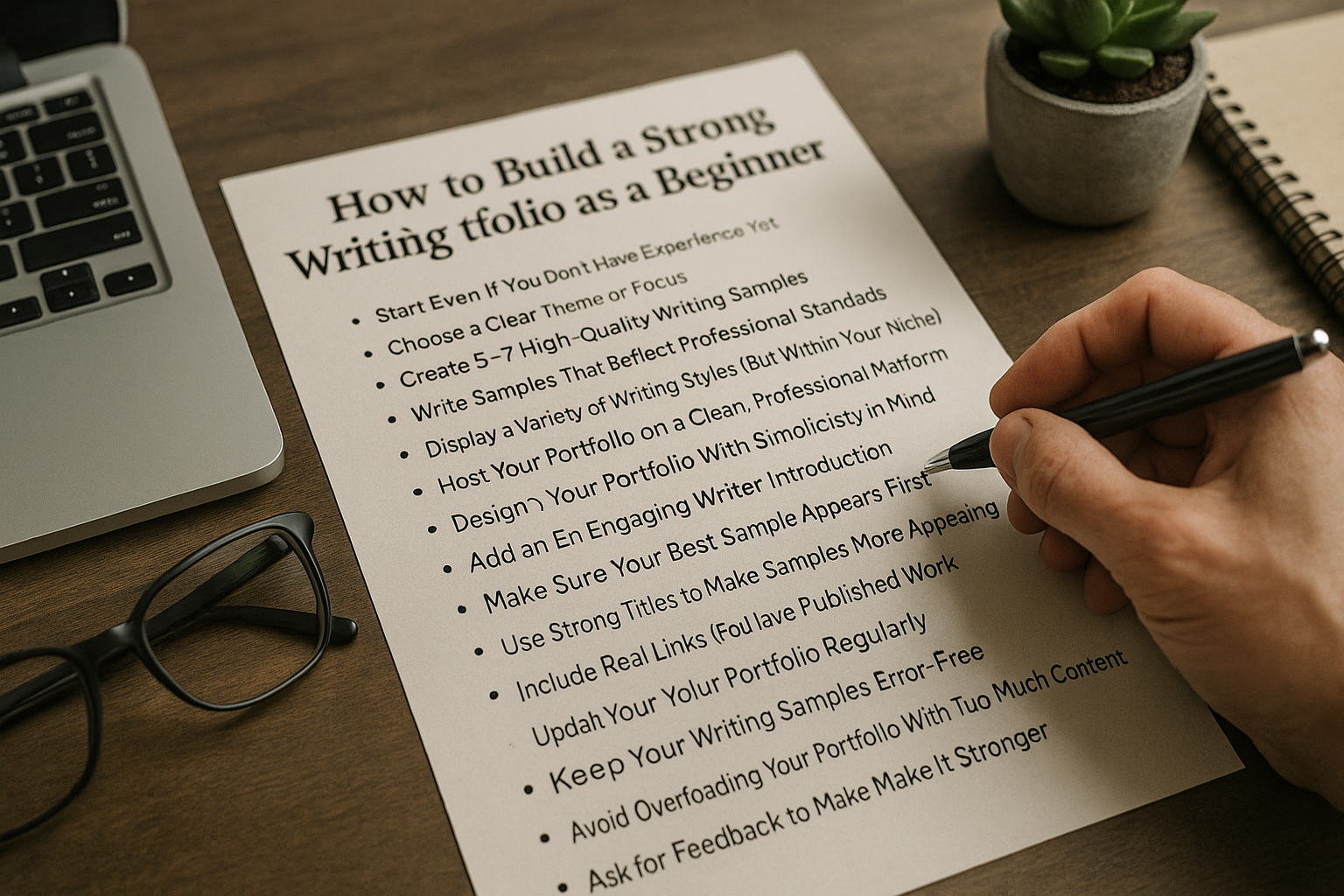
A writing portfolio is one of the most valuable tools a new writer can create. It is your professional showcase — a collection of your best work, displayed in a clear and organized way, so potential clients, editors, or employers can understand your skills at a glance. Even if you’re just starting, a strong portfolio can open doors, build credibility, and help you stand out in a competitive market.
But many beginners feel overwhelmed by the idea of creating a portfolio. They worry they don’t have enough work, don’t know what to include, or fear their writing isn’t “good enough.” The truth is: every writer can build a powerful portfolio, even with little experience — as long as they approach it strategically.
This guide will help you create a professional writing portfolio from scratch, choose the right pieces to include, and present your work in a way that makes you look confident and capable.
Understand Why You Need a Writing Portfolio
A writing portfolio serves multiple purposes. It helps you:
- Prove your writing ability
- Display your tone, style, and versatility
- Build trust with clients or editors
- Show your growth and potential
- Stand out from other beginner writers
- Demonstrate professionalism
- Open doors to paid writing opportunities
Your portfolio is often your first impression — make it count.
Start Even If You Don’t Have Experience Yet
The biggest misconception beginners have is believing they must wait until they have clients to build a portfolio. This is false. You can — and should — create samples yourself.
These are called:
- Spec pieces (speculative writing samples)
- Practice pieces
- Portfolio samples
They’re completely acceptable, especially for beginners. Many successful writers started with portfolios made entirely of self-created articles.
Choose a Clear Theme or Focus for Your Portfolio
Your portfolio should reflect the type of writing you want to do. Trying to appeal to “everyone” makes your portfolio look confusing.
Ask yourself:
- What niche do I want to write in?
- What type of writing do I enjoy most?
- Who is my ideal client or reader?
Examples of portfolio focuses include:
- Blog posts
- Copywriting
- Social media content
- Technical writing
- Creative nonfiction
- How-to guides
- Personal development content
Choose a direction and build your samples around it.
Create 5–7 High-Quality Writing Samples
You don’t need dozens of pieces. A strong portfolio usually includes 5 to 7 excellent samples that highlight different strengths.
Types of samples you can create:
Blog posts
Useful for content writers and freelancers.
Product descriptions
Great for copywriters.
Email newsletters
Important for digital marketing.
About pages or landing pages
Shows persuasive writing skills.
Short essays or thought-provoking pieces
Ideal for reflective or creative writers.
Tutorials or how-to articles
Demonstrates clarity and structure.
Focus on quality, not quantity.
Write Samples That Reflect Professional Standards
If your writing samples look amateurish, your entire portfolio loses impact. To create high-level pieces:
- Use strong introductions
- Keep paragraphs short
- Use clear structure
- Make your writing scannable
- Avoid grammar mistakes
- Use a friendly, consistent tone
- Offer real value
These elements make your samples shine.
Display a Variety of Writing Styles (But Within Your Niche)
You want to show versatility without looking scattered.
For example, if your niche is personal development:
- Sample 1: Motivational article
- Sample 2: How-to guide
- Sample 3: Story-based article
- Sample 4: List-style blog post
- Sample 5: Problem-solution piece
All match your niche, but each shows a different skill.
Host Your Portfolio on a Clean, Professional Platform
Your portfolio needs a home — a place where people can view your work easily. Beginners do NOT need a full website.
Free and beginner-friendly options include:
- Contently
- Medium
- WordPress
- Wix
- Journo Portfolio
- Clippings.me
- Google Sites
Choose a platform that feels simple to maintain.
Design Your Portfolio With Simplicity in Mind
A great writing portfolio is minimalistic, allowing your writing to shine.
Your portfolio layout should include:
- A clean header
- A short introduction about you
- A list of writing samples
- Links to full articles
- Contact information
- A professional photo (optional)
Avoid clutter, unnecessary images, or flashy backgrounds. Simplicity looks more professional.
Add an Engaging Writer Introduction
Your introduction doesn’t need to be long. Aim for 4–6 sentences explaining:
- Who you are
- What you write about
- Your tone or style
- Your writing strengths
- Who your writing helps
- Your professional goals
Focus on clarity and confidence — not on listing achievements you don’t have yet.
Make Sure Your Best Sample Appears First
People often skim portfolios. Placing your strongest sample first increases your chances of making a positive impression immediately.
If you’re unsure which is best, choose the sample that:
- Shows your clearest writing
- Matches your desired niche
- Demonstrates your unique voice
- Feels the most polished
First impressions matter.
Use Strong Titles to Make Samples More Appealing
Even if your writing is excellent, boring titles can reduce engagement. Use persuasive, descriptive titles.
Instead of:
“Tips for Productivity”
Try:
“How to Boost Your Productivity Even When You Feel Unmotivated”
Engaging titles improve your portfolio instantly.
Include Real Links If You Have Published Work
If you’ve written guest posts, Medium articles, or social media content, include those links. Real publication builds credibility.
Even one published piece helps your portfolio shine.
Update Your Portfolio Regularly
Your writing improves. Your portfolio should evolve with you.
Update it when:
- You create a new strong sample
- You gain a client
- You publish an article
- Your focus changes
A portfolio is not static — it grows with your skills.
Keep Your Writing Samples Error-Free
A single typo can reduce trust. Edit your samples carefully.
Check for:
- Grammar
- Spelling
- Punctuation
- Tone consistency
- Structural flow
- Clarity
Professional writers edit — beginners improve by editing.
Highlight Your Strengths Clearly
Do not be shy about what you do well. Add a small section describing your strengths.
Examples:
- “I write clear, engaging blog posts.”
- “I specialize in simplifying complex topics.”
- “I write with warmth and emotional connection.”
This helps clients understand what to expect.
Organize Your Samples Strategically
Group your samples in categories if you have multiple writing types.
For example:
Blog Posts
– Sample 1
– Sample 2
Email Copy
– Sample 3
Product Descriptions
– Sample 4
Organization makes your portfolio easier to explore.
Add a Clear Call to Action
A portfolio should invite engagement. End with a simple direction.
Examples:
- “Contact me for writing collaborations.”
- “I’m available for freelance projects.”
- “Let’s work together — email me anytime.”
A clear call to action increases opportunities.
Avoid Overloading Your Portfolio With Too Much Content
Too many samples overwhelm the viewer. Stick to your best work. Remember:
A strong portfolio is curated — not crowded.
Ask for Feedback to Make It Stronger
Before publishing your portfolio, ask someone you trust to review it. You’ll gain insights on:
- Tone
- Structure
- Clarity
- Design
- Professionalism
Approving your portfolio with outside feedback makes it stronger.
Final Thoughts: Your Portfolio Is Your Gateway to Opportunities
You don’t need years of experience to create a powerful writing portfolio. You need:
- Confidence
- Clarity
- A handful of strong writing samples
- Simple, professional presentation
- A willingness to show your work
A well-crafted portfolio can attract readers, clients, and job opportunities — even if you’re a beginner.
Your writing matters. And your portfolio is how the world discovers it.