
Tone is one of the most important yet misunderstood elements of writing. It’s what gives your words personality, emotion, and intention. Tone influences how your message is received, how your audience feels while reading, and how credible, relatable, or persuasive your writing becomes.
For beginner writers, maintaining a consistent tone can be challenging. You might start writing casually, then shift into formal language, and end with something humorous without realizing it. These tone shifts confuse readers and weaken your message.
The good news? Developing a consistent tone is a skill you can learn — and once mastered, it transforms your writing into something clearer, more professional, and more enjoyable to read.
This guide will teach you how to understand tone, choose the right tone for your writing, and maintain consistency from beginning to end.
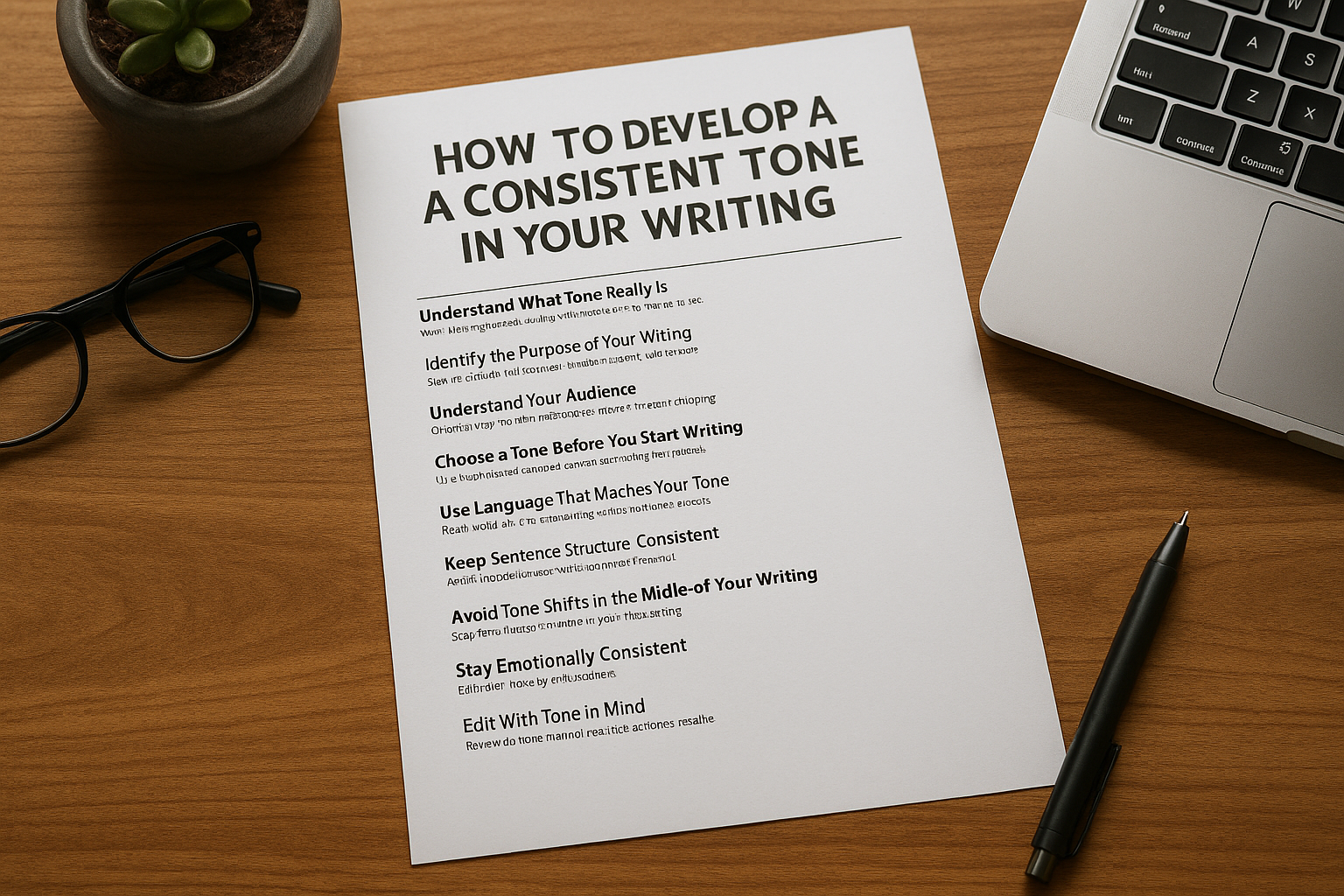
Understand What Tone Really Is
Tone is not what you say — it’s how you say it.
There are many tones you can use in writing, such as:
- Friendly
- Professional
- Inspirational
- Humorous
- Serious
- Casual
- Academic
- Motivational
- Conversational
- Story-driven
The tone you choose shapes the reader’s emotional experience and sets the foundation for how they interpret your message.
Identify the Purpose of Your Writing
Tone must match your goal. Before you write anything, ask:
- What is the purpose of this piece?
- Do I want to educate?
- Do I want to inspire?
- Do I want to entertain?
- Do I want to persuade?
- Do I want to inform?
If your goal is to educate, a clear and professional tone works well.
If your goal is to connect emotionally, a warm and conversational tone may be ideal.
Purpose guides tone.
Understand Your Audience
Your tone should reflect the expectations, preferences, and emotions of your audience.
Ask yourself:
- Who am I writing for?
- What age group?
- What level of knowledge do they have?
- What tone do they expect?
- Do they prefer simplicity or formality?
Writing for teenagers requires a different tone than writing for corporate professionals.
Tone is a bridge — it connects you to your reader.
Choose a Tone Before You Start Writing
One of the most effective ways to maintain tone consistency is to choose your tone at the beginning of the writing process.
You can define:
- “This post will be friendly and helpful.”
- “This article will be formal and informative.”
- “This content will be inspirational and uplifting.”
Naming your tone gives you direction and prevents accidental tone shifts.
Use Language That Matches Your Tone
Your word choice shapes your tone. For example:
Friendly:
“Let’s walk through this together.”
Professional:
“In this section, we will analyze the data.”
Motivational:
“You have the power to transform your writing.”
Humorous:
“Your draft isn’t a disaster — it’s just warming up.”
Words carry personality. Choose ones that match your tone.
Keep Sentence Structure Consistent
Consistency in sentence style also reinforces tone.
Casual tone:
- Short sentences
- Simple vocabulary
- Contractions (“you’re,” “don’t”)
- Personal expressions
Formal tone:
- Longer sentences
- Complete structure
- Precise vocabulary
- No contractions
Your sentence style should align with your tonal intention.
Avoid Tone Shifts in the Middle of Your Writing
Tone shifts are common among beginners. For example:
- Starting casually, then suddenly becoming academic
- Using emotional language, then switching to something cold
- Being humorous, then suddenly sounding strict
To avoid tone shifts, read your writing out loud. Tone inconsistencies usually become obvious when you hear the rhythm of your words.
Use Examples and Stories That Support Your Tone
Examples reinforce your tone.
Motivational tone:
Stories about overcoming challenges
Examples of success
Encouraging phrases
Professional tone:
Data
Logical explanations
Clear structure
Friendly tone:
Relatable anecdotes
Simple, warm explanations
Your examples should enhance your tone, not contradict it.
Stay Emotionally Consistent
Your emotional approach influences tone just as much as your word choices. If your writing begins hopeful and ends pessimistic, your tone becomes inconsistent.
Ask:
- What emotion do I want the reader to feel?
- Am I maintaining that emotion throughout the piece?
Emotional consistency strengthens tone consistency.
Use Tone Guidelines to Stay on Track
Many writers create tone guidelines for themselves. These guidelines include:
- Do use conversational language
- Don’t use overly formal expressions
- Do include personal stories
- Don’t use complicated vocabulary
Even professionals use tone guides — they keep your writing stable.
Edit With Tone in Mind
Editing is where tone becomes truly polished. During editing, ask:
- Does this sentence match my chosen tone?
- Is there a word that feels too formal or too casual?
- Did my tone shift halfway through a paragraph?
- Does the ending match the tone of the introduction?
Editing brings tonal harmony into your writing.
Use Consistent Pronouns and Point of View
Switching between “you,” “we,” “one,” and “they” can confuse tone and audience.
Consistent tone:
“You can build confidence as a writer.”
Inconsistent tone:
“One can develop confidence, and you will see improvements.”
Choose a point of view — and stick with it.
Avoid Copying Someone Else’s Tone
While it’s helpful to study other writers, copying their tone can lead to inconsistency because:
- Their tone is natural for them, not for you
- You may slip between your voice and theirs
- Your writing will feel disconnected
Learn from others, but speak with your own voice.
Let Your Personality Guide Your Tone
Tone becomes consistent when it feels natural. If you try to sound like someone else, your tone will shift unintentionally.
Ask yourself:
- What tone feels natural when I speak?
- Am I more formal or conversational?
- Do I enjoy humor or prefer seriousness?
- Do I express warmth or clarity first?
Your tone becomes consistent when it becomes yours.
Use Tone Anchors for Stability
Tone anchors are elements you repeat throughout your writing to maintain tone.
These include:
- A consistent sentence rhythm
- A recurring emotional mood
- A particular style of descriptions
- A repeated phrase structure
Anchors help stabilize your tone from start to finish.
Understand When Tone Should Change Intentionally
Sometimes, a tone shift is useful if done on purpose — not accidentally.
For example:
- Starting serious, then ending inspirational
- Starting empathetic, then becoming encouraging
- Starting casual, then becoming authoritative
Intentional tone changes feel natural because they follow the flow of your message.
Practice Writing in Different Tones
The more tones you practice, the easier it becomes to control them.
Try writing:
- A formal paragraph
- A humorous version of the same paragraph
- A motivational rewrite
- A conversational rewrite
This exercise strengthens your tonal flexibility.
Build Tonal Awareness Through Reading
When you read, pay attention to how authors create tone. Notice:
- Word choices
- Sentence length
- Pacing
- Emotional tone
- Formality level
Reading widely helps you understand how tone works — and how to apply it effectively.
Final Thoughts: Consistent Tone Makes Your Writing Stronger
Tone is what makes writing human. It’s what helps readers feel connected, understood, and motivated to keep reading. As a beginner, learning to maintain a consistent tone is one of the most important skills you can develop.
Remember:
- Know your purpose
- Understand your audience
- Choose your tone early
- Match your language to your tone
- Edit with tone in mind
- Practice regularly
- Stay true to your voice
Once you master tone consistency, your writing becomes smoother, clearer, and far more engaging — no matter the topic.