
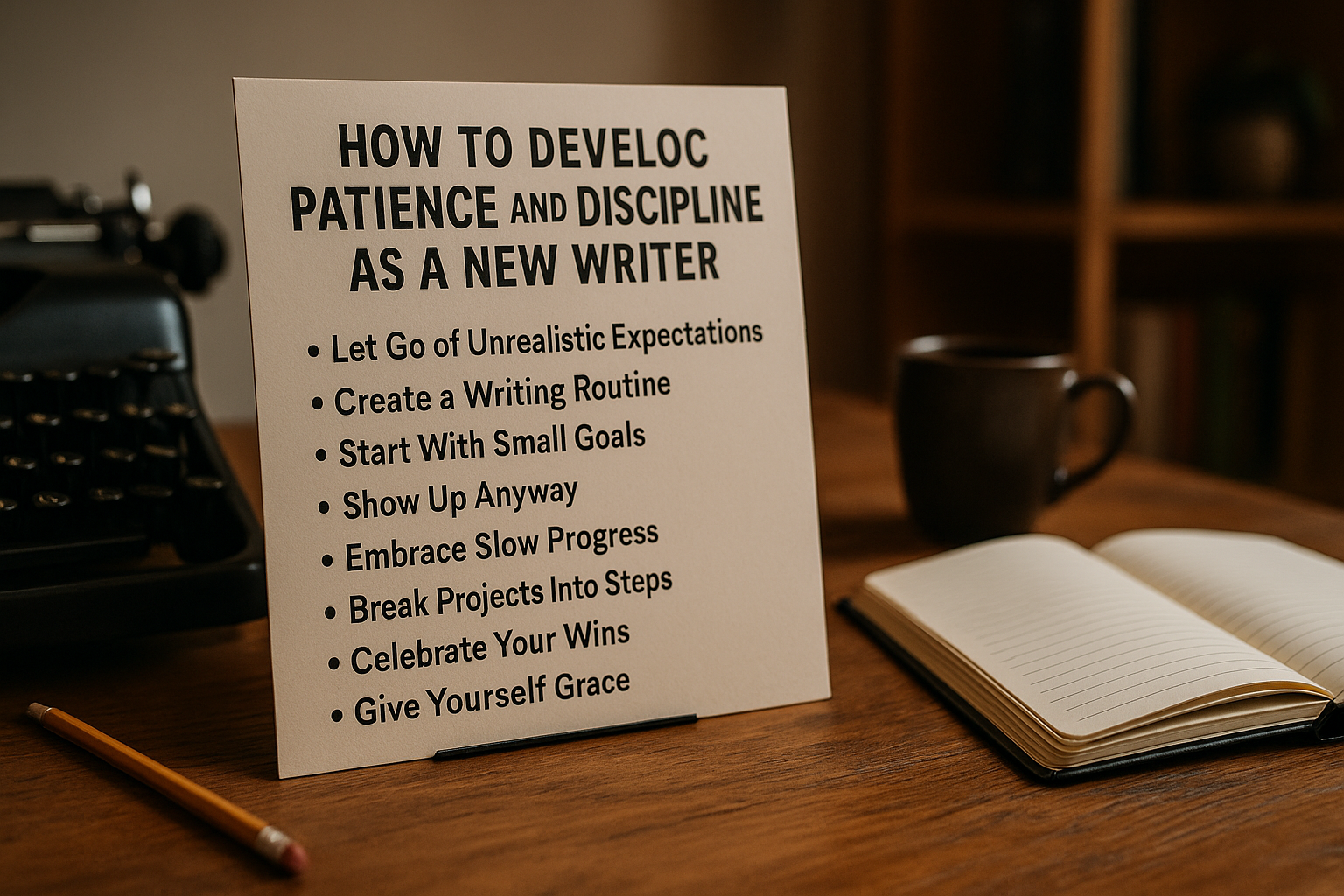
Becoming a skilled writer takes time, consistency, and emotional resilience. Writing isn’t just a creative activity — it’s a journey of personal growth. And like any meaningful journey, it requires patience and discipline.
Many beginners struggle with self-doubt, frustration, slow progress, and the belief that writing should come naturally. But writing is not a talent you’re born with — it’s a skill you build. And patience + discipline are the two pillars that make this growth possible.
This guide will help you develop the mindset and habits that support long-term success as a writer, even when motivation fades or progress feels slow.
Understand Why Patience Matters in Writing
Writing improvement happens gradually. You don’t become confident overnight. You don’t find your voice overnight. You don’t master structure, clarity, or creativity overnight.
Patience matters because:
- Writing skills grow slowly
- Ideas take time to develop
- Writing requires experimentation
- Editing improves your work gradually
- Confidence grows with experience
- Your voice develops over months, not days
When you embrace the long game, frustration decreases and progress becomes more enjoyable.
Understand Why Discipline Is Even More Important Than Inspiration
Waiting for inspiration is one of the biggest mistakes beginners make. Inspiration is unreliable. Discipline is not.
Discipline helps you:
- Write consistently
- Improve faster
- Build confidence
- Overcome fear
- Develop a routine
- Finish projects
- Keep growing even on difficult days
Successful writers don’t rely on motivation. They rely on habits.
Let Go of Unrealistic Expectations
Beginners often expect:
- Their first drafts to be amazing
- Their ideas to flow perfectly
- Progress to be fast
- Writing to feel easy all the time
These expectations create disappointment.
Replace unrealistic expectations with realistic ones:
- Writing is messy
- Improvement takes time
- Ideas need space
- Every writer struggles
- Your best work comes through practice
When expectations match reality, patience becomes easier.
Create a Writing Routine You Can Actually Follow
Discipline is built through routines, not pressure. But your routine must be realistic.
Try:
- 10 minutes of writing per day
- 150–300 words daily
- Writing at the same time each day
- A pre-writing ritual (music, coffee, quiet time)
Small habits are easier to maintain — and small habits lead to big results.
Start With Small, Achievable Writing Goals
Goals that are too big lead to burnout. Goals that are too small lead to progress.
Examples of achievable goals:
- “Write one paragraph.”
- “Write 100 words.”
- “Edit one section.”
- “Outline tomorrow’s ideas.”
Success builds discipline. Discipline builds success.
Use the “Show Up Anyway” Rule
Some days you’ll feel inspired. Other days you won’t. But discipline means showing up even when you’re not in the mood.
You don’t need to write a lot.
You don’t need to be perfect.
You just need to show up.
Even writing one sentence on a difficult day strengthens your discipline.
Develop a Growth Mindset
A growth mindset means understanding that writing is something you improve through practice, not perfection.
Writers with a growth mindset:
- Learn from mistakes
- Accept feedback
- Celebrate progress
- Avoid comparing themselves
- Keep trying even after setbacks
Patience is natural when you believe you can grow.
Track Your Writing Progress
Tracking your writing habits helps you see improvement you might otherwise miss.
You can track:
- Days written
- Words written
- Articles completed
- Confidence level
- Skills you improved
Tracking builds discipline because you see your effort paying off.
Build a Supportive Writing Environment
Your environment influences your discipline. Create a space that makes writing easier:
- Quiet
- Comfortable
- Free of distractions
- Emotionally supportive
- Associated with creativity
Your mind writes better when your environment supports you.
Avoid Comparing Yourself to Other Writers
Comparison kills patience. It creates insecurity, jealousy, and self-doubt.
Remember:
- Every writer started as a beginner
- Everyone improves at different speeds
- Great writing takes years
- You only see the final version of others
- Your journey is unique
Focus on becoming better than you were yesterday — not better than someone else.
Learn to Embrace Slow Progress
Slow progress is still progress. Every sentence, every paragraph, and every article shapes your writing ability.
Tell yourself:
- “I am building a skill.”
- “Every attempt matters.”
- “Consistency beats speed.”
When you appreciate small steps, you naturally become more patient.
Break Big Projects Into Small Steps
A full article or story can feel intimidating. Breaking it into smaller tasks increases discipline and reduces overwhelm.
Break writing into steps:
- Brainstorm ideas
- Choose a topic
- Create an outline
- Write the introduction
- Write one section at a time
- Edit lightly
- Proofread
- Publish or save
Small steps make big goals achievable.
Know When to Rest
Discipline is not about pushing yourself until you collapse. Real discipline includes rest.
You should rest when:
- You feel drained
- Writing becomes frustrating
- Your mind is foggy
- You haven’t taken a break in days
Rest protects your long-term creativity and patience.
Celebrate Your Wins
Beginners often overlook their progress. Celebrating accomplishments boosts motivation and builds discipline.
Celebrate when you:
- Finish an article
- Complete your daily writing session
- Overcome procrastination
- Write something better than last week
- Reach a writing streak
Celebrate small wins to reinforce your habit.
Remind Yourself Why You Write
When patience fades, reconnect with your purpose.
Ask:
- Why do I want to write?
- What impact do I want to make?
- What does writing give me emotionally?
- How does writing improve my life?
Your “why” strengthens your discipline.
Accept That Writing Will Always Have Challenges
Even professional writers experience:
- Writer’s block
- Doubt
- Frustration
- Slow days
- Difficult edits
- Creative fatigue
Challenges are normal — not signs that you should quit.
Patience means continuing despite challenges.
Discipline means building habits that support your persistence.
Create Accountability
Accountability helps you maintain discipline when motivation fades.
Try:
- A writing friend
- A writing group
- A mentor
- Posting your progress online
- Setting scheduled sessions
Accountability increases commitment.
Use Tools That Support Your Writing
Tools help you write regularly and stay organized.
Useful writing tools:
- Google Docs
- Notion
- Grammarly
- Pomodoro timers
- Writing prompts apps
- Digital notebooks
Use tools to support your journey — not replace discipline.
Give Yourself Grace During the Learning Process
Be kind to yourself. Patience grows when you give yourself permission to:
- Make mistakes
- Write badly
- Learn slowly
- Start over
- Rest when needed
Self-compassion leads to long-term success.
Final Thoughts: Patience and Discipline Make You a Writer
Great writers aren’t the most talented — they’re the most persistent.
Patience helps you accept the pace of learning.
Discipline helps you show up consistently.
Together, they turn beginners into professionals.
Remember:
- Progress takes time
- Consistency matters more than speed
- Writing improves with practice
- You don’t need perfection to keep going
- Your writing journey is unique and valuable
Develop patience. Strengthen discipline.
And watch your writing career unfold beautifully.