
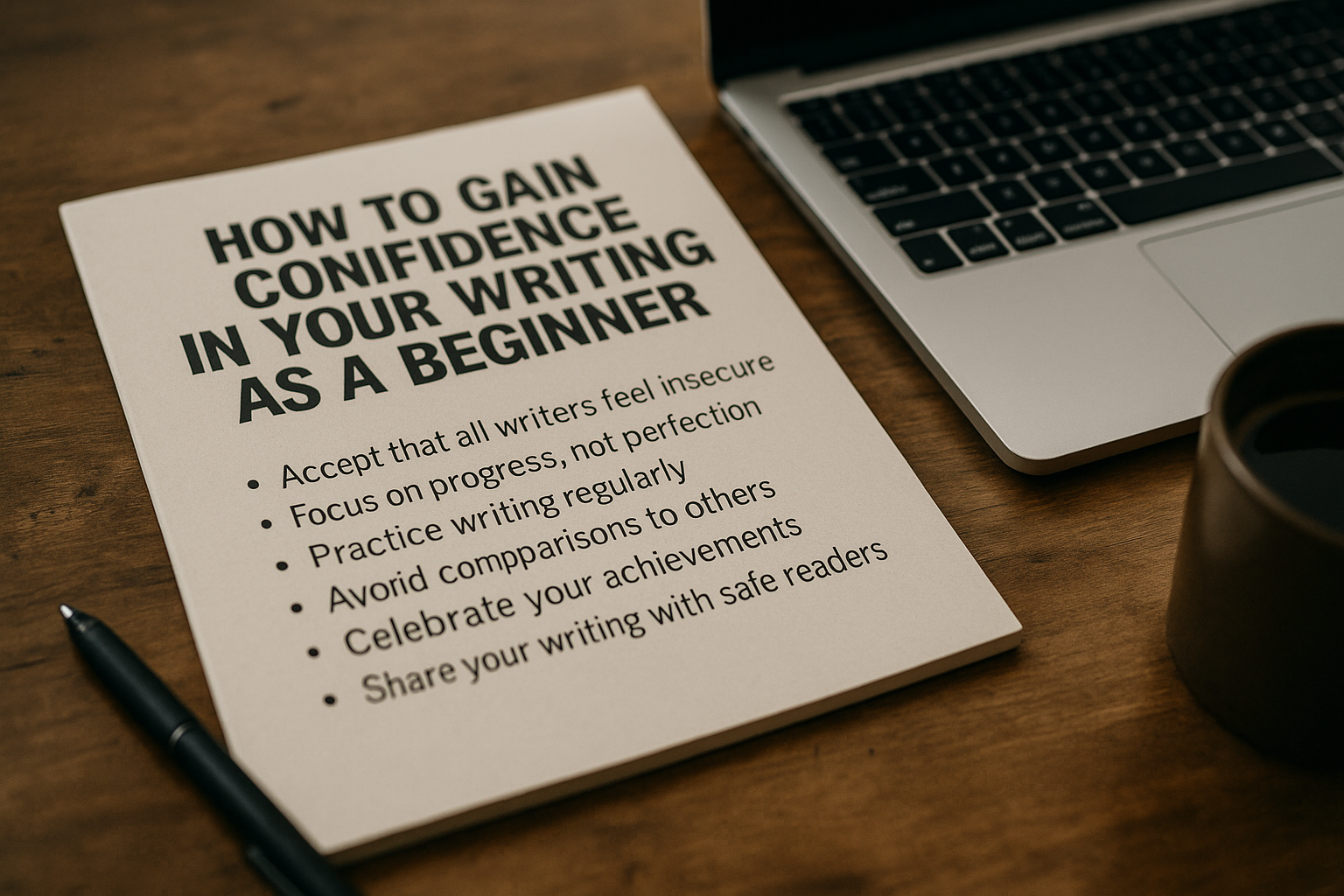
Confidence is one of the most important skills a writer can develop — and one of the hardest. When you’re a beginner, every sentence feels uncertain. You question whether your ideas are good enough, whether your writing sounds professional, and whether anyone will care about what you have to say. This self-doubt is completely normal.
The truth is: confidence is not something you magically wake up with one day. Confidence in writing is built slowly through practice, courage, and trust in your own voice. Every writer — no matter how successful — started with insecurity. What matters is learning how to overcome it so you can grow, improve, and enjoy the writing journey.
This guide will teach you how to strengthen your writing confidence step-by-step, even if you feel unsure or inexperienced.
Understand That All Writers Feel Insecure
One of the biggest confidence boosters is realizing that insecurity is universal. Even famous, bestselling authors have admitted to feeling:
- Doubt
- Fear
- Imposter syndrome
- Uncertainty about their ideas
Beginners often think they are the only ones who struggle with confidence. But insecurity is not a sign of being a bad writer — it’s a sign that you care about your work.
Confidence grows when you stop expecting yourself to feel confident all the time.
Focus on Progress, Not Perfection
Perfectionism destroys confidence. Trying to write perfect sentences, perfect paragraphs, or perfect articles at the beginning is impossible. Great writing is created through rewriting, editing, and improving — not through perfection in the first draft.
Instead of asking:
“Is this good enough?”
Ask:
“Is this better than yesterday?”
When you focus on improvement rather than perfection, confidence becomes much easier to build.
Practice Writing Frequently (Even in Small Amounts)
Confidence grows through repetition. The more you write, the more natural writing feels.
Try:
- Writing 10 minutes a day
- Freewriting to remove pressure
- Journaling
- Writing short prompts
- Practicing one paragraph at a time
Small, consistent writing sessions build familiarity, which builds confidence.
Stop Comparing Yourself to Experienced Writers
Comparison is one of the fastest ways to lose confidence. You might read a polished article from an experienced writer and think:
“I’ll never be this good.”
But you’re comparing your beginning to someone else’s years of practice.
Instead of comparing yourself to others, compare yourself to your past self. Look at the progress you’ve already made. Every improvement — even tiny — increases your confidence.
Celebrate Your Writing Achievements
Beginners often ignore their progress. They only focus on what still needs improvement. But celebrating your wins reinforces confidence.
Celebrate when you:
- Finish an article
- Write more than yesterday
- Learn a new skill
- Receive positive feedback
- Overcome writer’s block
Small celebrations strengthen your belief in your abilities.
Share Your Writing With Safe Readers First
Sharing your writing too early with overly critical people can destroy your confidence. Start by sharing your work with:
- Supportive friends
- Writing communities
- Beginner-friendly groups
- Encouraging mentors
Positive, constructive feedback helps you grow — not shrink.
Keep a Writing Journal to Track Growth
A journal helps you see your improvement over time. You can track:
- Skills you’ve learned
- Mistakes you’ve fixed
- Feedback you’ve applied
- Pieces you’ve completed
- Confidence levels
Progress becomes visible — and visible progress builds confidence.
Identify Your Strengths as a Writer
Most beginners only focus on their weaknesses. But every writer has strengths, even at the beginning.
You may be good at:
- Explaining ideas clearly
- Writing with empathy
- Creating vivid descriptions
- Asking meaningful questions
- Keeping your tone friendly
- Telling personal stories
Identifying your strengths boosts confidence and helps you grow from a solid foundation.
Accept That First Drafts Are Supposed to Be Messy
Many beginners lose confidence because their first drafts look imperfect. But first drafts are never meant to be beautiful — even for experienced writers.
First drafts are tools. They are the raw material you shape into something clear and polished. Accepting “messy first drafts” removes pressure and boosts confidence.
Read More to Strengthen Your Writing Intuition
Reading is one of the easiest ways to build confidence as a writer. When you read:
- You absorb sentence structure
- You learn new vocabulary
- You understand tone
- You gain inspiration
- You improve rhythm
- You recognize good writing techniques
Reading trains your writer’s mind.
Learn Basic Writing Skills Gradually
Confidence grows when you improve your skills step by step. Focus on learning:
- How to structure paragraphs
- How to write clear sentences
- How to create strong openings
- How to use transitions
- How to write with purpose
Every new skill you master increases confidence.
Ask for Feedback — and Use It Wisely
Feedback helps you improve, but only when it’s constructive. Learn to:
- Accept helpful feedback
- Ignore harsh or unhelpful comments
- Look for patterns
- Apply advice to your next piece
Feedback is a tool for growth — not a judgment of your worth.
Rewrite and Edit With Purpose
Confidence grows when you see how much better your writing becomes through editing. Editing shows you that improvement is always possible.
When you revise:
- Remove unnecessary words
- Improve clarity
- Strengthen verbs
- Fix structure
- Sharpen tone
- Smooth transitions
Watching your writing improve builds trust in your abilities.
Write in a Tone That Feels Natural to You
Trying to sound like another writer makes you feel artificial — and kills confidence. Your tone should reflect who you are.
You might be naturally:
- Warm
- Energetic
- Calm
- Direct
- Conversational
- Humorous
- Analytical
Write in a tone that aligns with your natural personality.
Set Realistic Writing Goals
Goals help build momentum and confidence. But they must be achievable.
Examples of realistic beginner goals:
- Write 100–200 words a day
- Finish one article a week
- Practice writing intros
- Learn one new technique per week
Clear goals make progress measurable — and measurable progress builds confidence.
Focus on the Message, Not Just the Writing
Sometimes confidence improves when you remember the purpose of writing: to communicate something meaningful. Even if your writing isn’t perfect, your message matters.
When you focus on what you want to express, your writing becomes more authentic — and confidence grows naturally.
Build a Positive Writing Environment
Confidence is influenced by how you feel. Create a writing environment that supports comfort and creativity:
- Quiet music
- Warm lighting
- A clean workspace
- A comfortable seat
- A ritual (tea, stretching, or deep breathing)
Your environment can increase your confidence before you even start writing.
Allow Yourself to Be a Beginner
Confidence grows when you allow yourself to be imperfect. Nobody starts as an expert. Growth is part of the journey.
Tell yourself:
- “I don’t need to know everything right now.”
- “I’m improving every day.”
- “I’m learning — and that’s enough.”
Permission to learn is the foundation of confidence.
Final Thoughts: Confidence Is Built, Not Found
Confidence in writing does not come from praise, perfection, or waiting for the right moment. Confidence comes from:
- Showing up consistently
- Practicing small skills
- Accepting imperfection
- Learning from mistakes
- Celebrating progress
- Trusting your voice
- Being patient with yourself
You don’t need to feel confident to write — but writing will eventually give you confidence.
Keep going. You’re becoming a writer with every word.