
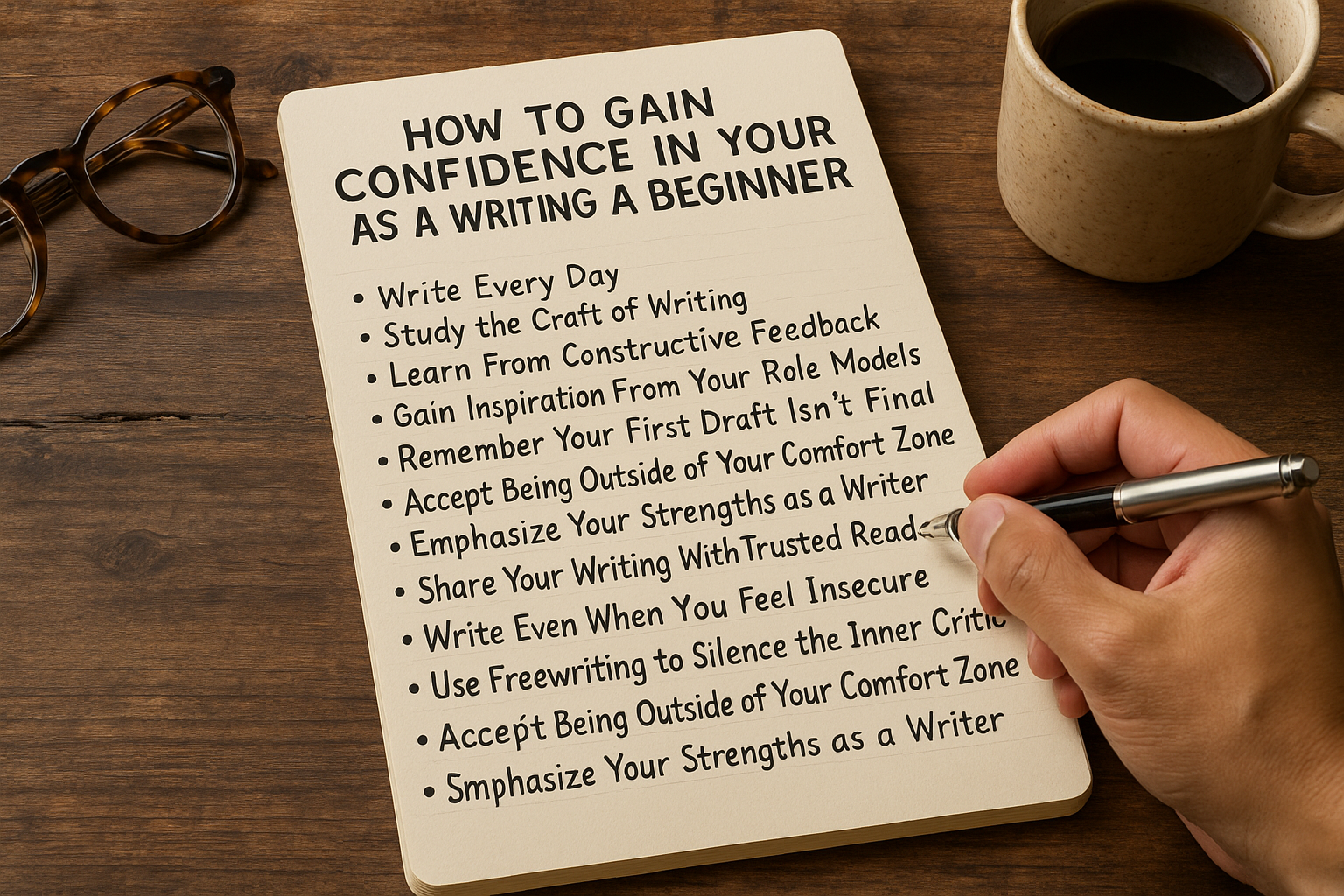
Self-doubt is one of the biggest obstacles beginner writers face. It sneaks into your mind when you’re staring at a blank page, when you compare your writing to others, or when you wonder whether your words are worth sharing. Nearly every writer, no matter how experienced, goes through moments of doubt. It’s part of the creative process — but it doesn’t have to control you.
Overcoming self-doubt isn’t about eliminating fear entirely. It’s about learning how to write despite it. It’s about recognizing that doubt is normal, manageable, and often a sign that you care deeply about your craft. This guide will help you navigate self-doubt, strengthen your mindset, and become a more confident, resilient writer.
Understand That Self-Doubt Happens to Every Writer
Many beginners assume self-doubt is proof they’re not good enough. But in reality, even best-selling authors admit to doubting themselves.
Self-doubt does not mean:
- You lack talent
- You’re not capable
- You shouldn’t be writing
Self-doubt does mean:
- You want to do your best
- You care about your message
- You are growing and learning
Recognizing that doubt is part of the writer’s journey helps you feel less alone — and more empowered.
Stop Expecting Your Writing to Be Perfect
Perfectionism and self-doubt are best friends. Beginners often believe their writing needs to be flawless on the first try. But writing is a process — and first drafts are meant to be messy.
Tell yourself:
- “I don’t need perfection to make progress.”
- “My first draft is just the beginning.”
- “Editing will make this stronger later.”
Relieving yourself of perfection frees you to write with clarity and courage.
Focus on Writing Instead of Judging Yourself
Many writers judge their work while writing it. This creates mental pressure and increases doubt. Writing and judging cannot happen at the same time.
Separate the two stages:
- Write freely first
- Edit later with clarity
When you allow creativity to flow without interruption, your confidence naturally improves.
Understand That Your Voice Is Unique — and Valuable
Self-doubt often stems from comparing your writing to others. But nobody else has your experiences, your insights, your emotions, or your perspective. Your voice is your greatest strength.
Ask yourself:
- What makes my perspective different?
- What experiences shaped the way I write?
- What do I naturally express well?
Embracing your uniqueness reduces doubt and increases authenticity in your writing.
Stop Comparing Your Writing to Professionals
Comparing your early writing to the polished work of professional authors or experienced bloggers is unfair. You’re comparing your first chapter to their 20th book — and often ignoring the years of practice behind it.
Instead, compare your writing to:
- Your past drafts
- Your earlier articles
- Your early sentence structures
Seeing your own improvement strengthens your confidence.
Set Small, Manageable Writing Goals
Big goals create pressure. Pressure creates doubt. Small goals, however, build steady confidence.
Try goals like:
- Write for 10 minutes
- Write 150–200 words
- Finish one paragraph
- Explore one idea
Every time you complete a small goal, your confidence grows.
Keep a Record of Positive Feedback
Beginners often forget the good comments and focus only on criticism. Create a “Positivity Folder” where you save:
- Praise
- Compliments
- Encouraging messages
- Notes about progress
On days when self-doubt hits hard, revisit this folder. It’s powerful.
Accept That Not Everyone Will Like Your Writing — And That’s Okay
Even the world’s most famous authors have critics. Your writing doesn’t need to please everyone. It only needs to reach the people who resonate with your voice and message.
When you accept this:
- Pressure decreases
- Doubt becomes more manageable
- Writing becomes more enjoyable
Your goal is not universal approval — it’s genuine expression.
Write Even When You Feel Insecure
Self-doubt grows stronger when you avoid writing. Your brain begins associating writing with fear. The solution?
Write anyway.
Even if you feel uncomfortable, insecure, or uncertain, writing despite doubt builds emotional strength.
Courage grows through action.
Use Freewriting to Silence the Inner Critic
Freewriting helps you bypass the voice of doubt by writing without rules.
Set a timer for 5–10 minutes and write continuously about:
- Your thoughts
- Your feelings
- Your ideas
- Your experiences
Freewriting clears mental clutter and builds creative trust.
Develop a Writing Ritual That Makes You Feel Grounded
Confidence often comes from comfort.
Build a ritual that signals your brain:
“Now is writing time. I am safe to create.”
Your ritual could include:
- A warm drink
- A quiet playlist
- A clean workspace
- A breathing exercise
- A specific time of day
Rituals reduce anxiety and give writing emotional stability.
Surround Yourself With Encouraging Writers
Joining a writing community — even online — gives you:
- Support
- Encouragement
- Accountability
- Guidance
- Shared struggles
Feeling understood reduces self-doubt dramatically.
Learn Basic Writing Skills to Strengthen Your Foundation
Sometimes self-doubt appears because you feel unsure of your writing techniques. Learning foundational skills builds competence — and competence builds confidence.
Focus on:
- Sentence clarity
- Paragraph structure
- Tone consistency
- Descriptive techniques
- Transitions
- Strong openings and closings
The more you understand the craft, the more confident you feel.
Read Your Writing Out Loud
Reading your writing aloud helps you:
- Hear your voice
- Notice rhythm
- Identify clarity issues
- Spot awkward phrasing
Many writers discover their writing sounds better than they thought — instantly boosting confidence.
Understand That Writing Improves Through Revision
Your writing doesn’t need to be good immediately. Editing makes your writing stronger.
Each revision:
- Improves clarity
- Strengthens ideas
- Polishes tone
- Reduces errors
- Enhances flow
Knowing you can revise reduces the pressure to be perfect.
Remind Yourself Why You Started Writing
Reconnect with your purpose.
Ask yourself:
- Why do I want to write?
- What does writing allow me to express?
- Who do I want to help or inspire?
- What excites me about writing?
Purpose is stronger than doubt.
Accept That Self-Doubt Will Never Fully Disappear
Even successful writers experience doubt. The goal is not to eliminate it — the goal is to write anyway.
Confidence is:
- A skill
- A practice
- A mindset
- A choice
Every time you write despite doubt, you grow stronger.
Final Thoughts: Your Voice Deserves to Be Heard
You are not alone in your self-doubt. Every great writer started where you are. What separates successful writers from those who quit is not talent — it’s perseverance.
Remember:
- Your writing matters
- Your voice is unique
- Progress takes time
- Doubt is normal
- Confidence comes with practice
- Writing is worth the effort
Write bravely. Write imperfectly. Write consistently.
Your confidence is growing each time you show up.